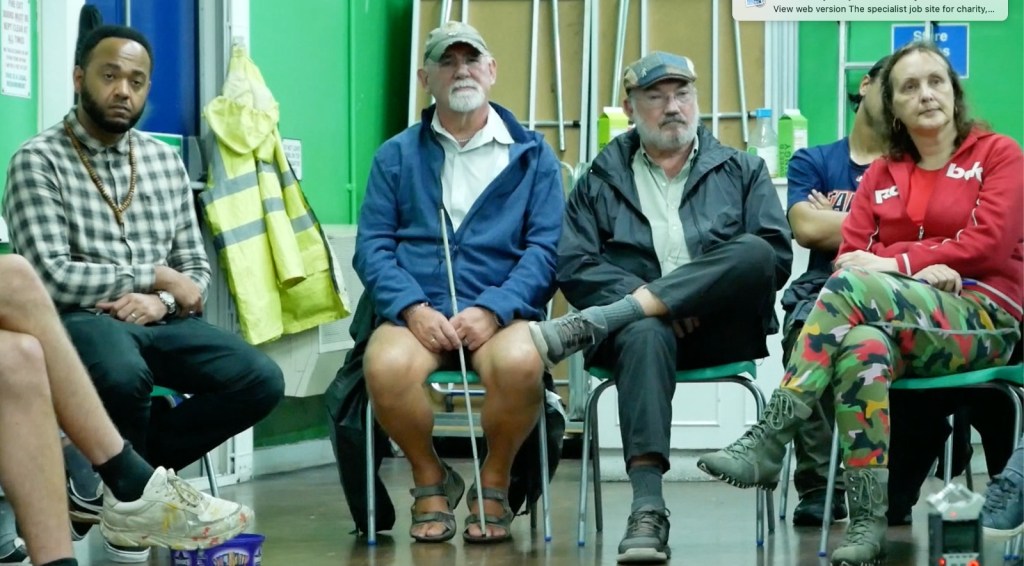
Why we’re resigning from the Hackney Central Community Panel

An open letter to the Mayor of Hackney from Morning Lane People’s Space

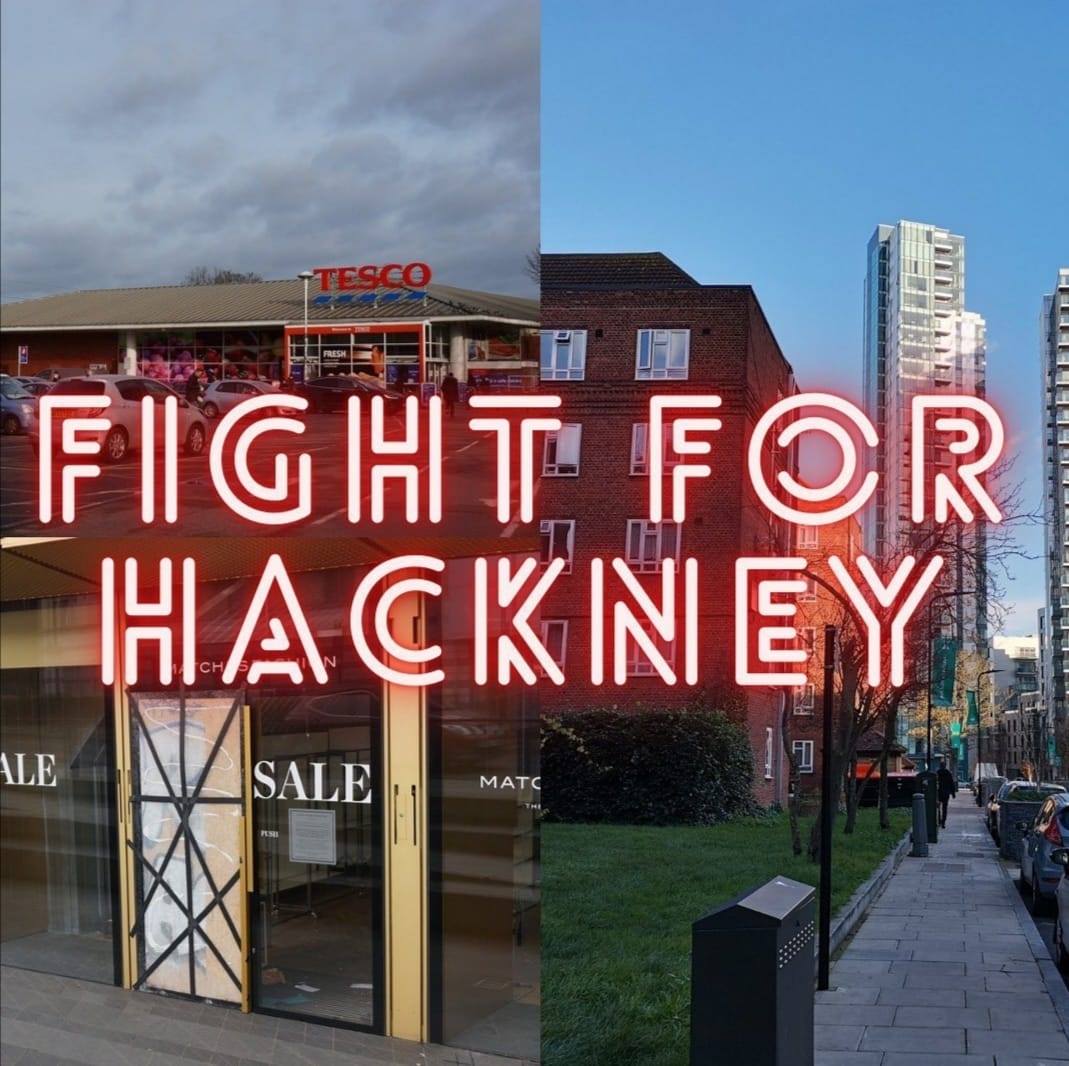
We’re MOPS (Morning Lane People’s Space), local residents who for five years have been working to get a voice for residents in our Council’s plans to build on the Tesco site at 55 Morning Lane in the heart of Hackney Central. We have listened and consulted widely. We have stood outside Tesco and talked to hundreds of people about what they want to see on the site. Thousands of local people completed surveys, and we shared the results. We have held public meetings, and much more.

We’re sad to be resigning from the Hackney Central Community Panel. We’ve been one of its most active members. In a recent review, we pointed out it’s not representative of the community. It is unclear how new members are involved. The content and logistics of discussions are controlled by the Council. Perhaps the top-down approach is why attendances at the two meetings held this year were in single figures.

Our reason for resigning is Hackney Council’s decision that the community reps who will help choose an architect for 55 Morning Lane will come from this unrepresentative Council-controlled Panel. If we remain, we will be validating this half-baked and corrupt process.

On Thursday 10th October, Hackney Central Community Panel members were invited by Nicola Hudson, the Council officer responsible for the Tesco site, to apply to participate in the evaluation panel, to help select an architect for the site’s redevelopment. The invitation was short notice – giving organisations just four days across the weekend to complete a nomination form. The architect is to be appointed only a week later on the afternoon of Monday 21st October and anyone putting themselves forward has to be free to attend then. Also at late notice, successful applicants will need to attend a training session – though its time on 16th October is not provided, and will need to fit in hours of required reading during the week.

There are about 25 people on the Community Panel – a mix of businesses and community organisations. The businesses include one property development financier, four bars/pubs, three shops, and two networks. The community organisations include a few grassroots groups like us with elected officers and regular meetings, but most aren’t directly accountable to residents. They include the London College of Fashion and Sutton House. None of the many Tenants and Residents Associations in the area are on the Panel. The Council decides who is on the Panel and which of these groups will help them select an architect. MOPS believe in an open process where, as a community, we – not the Council – choose who represents us.

Rather than civic engagement this feels like a last minute, tick-box exercise. It could have been very different.

Less than three weeks before Hackney Central Community Panel members were emailed, MOPS held a public meeting with 50+ people present. The Mayor and Deputy Mayor responsible for regeneration, and Nicola Hudson attended, with a 10-minute platform to share how they planned to engage the public via ‘co-design’! Nicola said she wants to design the site and select the architect with us. She didn’t say that five architects had already been shortlisted and their presentations scheduled. Or that the many interested and informed residents attending the meeting would not be eligible to take part in the selection process. Rather than seize an opportunity to share and get feedback on the process, she ignored all the pleas for transparency.

The current process is not co-design. It’s not even consultation. It is PR. Although promised in the public meeting, the Council is yet to share key information such as timelines and decision-making processes. While the language of community engagement is sprayed about, Hackney councillors and officers are untruthful. One of repeated comments we hear leafleting outside Tesco is: “You can’t trust Hackney council”. We said: “Come to our public meeting and hear what they have to say”. Sadly, the community has been proved right.

55 Morning Lane is hugely important for Hackney. It is not ‘business-as-usual’ – it is a town centre redevelopment, where the interests and concerns of residents must be central. We will continue our work to get residents’ voices heard by Hackney Council in their plans for the site, and to ensure a large Tesco remains, and at least 50% of any housing built there is public housing that can provide homes for families on the waiting list.

While we’re resigning from the Panel, we’ll always be willing to meet with and talk to you and others at the Council if that happens on the basis of openness and honesty. As the people who’ve stood up for the site for five years, we hope you’ll want to do that.

Hackney Council break their promise to work with residents to co-design the Tesco site in Hackney Central

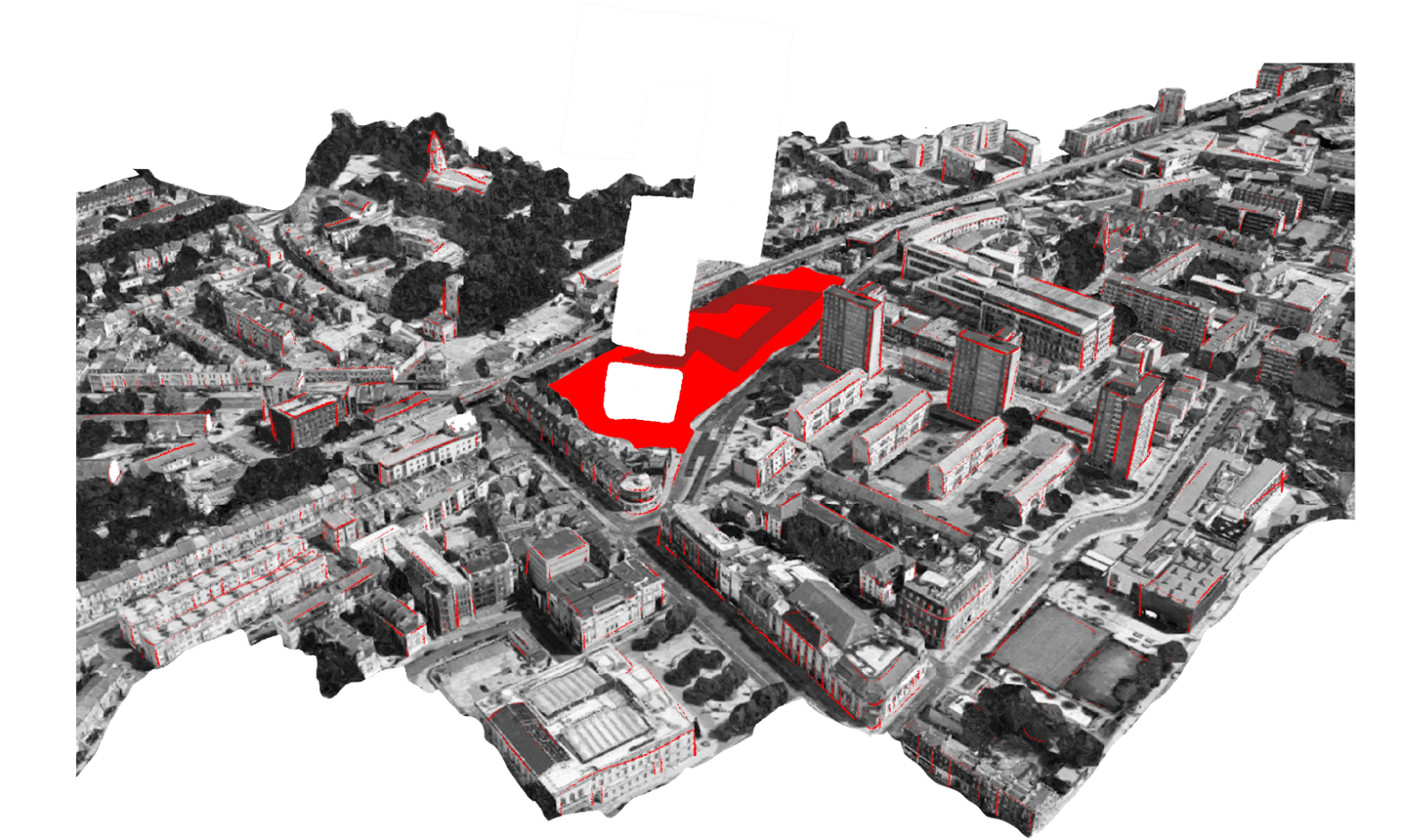
As Morning Lane People’s Space, we are campaigning for a community voice in the Council’s plans to build on 55 Morning Lane in Hackney Central – currently the site of a big Tesco store and car park.

For years our message to Hackney Council has been that working with residents needs 3 things from them:

  1. Being OPEN
  2. TRUSTING us
  3. SHARING their knowledge

Hackney Council has failed again and again at these.

At our public meeting on 21 September, Nicola Hudson (the council officer responsible for 55 Morning Lane) said that Hackney Council will design the site with the local community. She said we’re starting from a blank slate and we’ll decide the architects together.

This is dishonest because our Council has already shortlisted architects and asked them to submit ideas for the site that include replacing the current Tesco with a much smaller store.

We welcome the Council appointing co-design consultants to work with residents. But these consultants cannot do their job if Hackney Council is not truthful with our community and if they refuse to share information and decisions with us.

Below are 3 conditions which must be met by Hackney Council before they can expect residents to give our time and share our knowledge and skills with them:

  1. MAKE KEY INFORMATION PUBLIC, including:
  • The architects who’ve been selected, their brief, and any responses to it.
  • All restrictions on what can be built on the site.
  • The provisional timeline for the development.
  1. EXPLAIN HOW THE COMMUNITY WILL BE INVOLVED, specifically:
  • Building is not set to start until 2027, what will happen after the consultants leave in a few months time?
  • What support will be given to residents who take part in co-design? This must include money – it shouldn’t just be architects, consultants and council workers whose time is paid.
  1. TELL US HOW DECISIONS WILL BE MADE, specifically:
  • Which decisions will be made by the Council, which by the community and which will be joint?
  • What are the mechanisms for those decisions? e.g. an online vote, consensus at a public meeting, two elected residents to join a procurement panel.


Currently Hackney Council say they’re doing ‘co-design’ but their approach is top-down. We urge them to do bottom-up planning for real. That’s the only way we can create an inspiring development on 55 Morning Lane which serves the people of Hackney and in which we all have a stake.

Hackney Council are excluding residents from a key decision for the future of the Tesco site in Hackney Central (55 Morning Lane)

After years of campaigning, Hackney Council have finally shared a timetable with us in MOPS (Morning Lane People’s Space) for the future of the Tesco site at 55 Morning Lane. Although Council officers talk about the importance of involving residents, what they’re suggesting is more PR than community engagement. Although they talk about co-design, they are refusing to share key decisions with people who live locally.

We understand that co-design is something new for Hackney Council’s staff and councillors, who are used to top-down development. From the failed Fashion Hub to the ‘regeneration’ of Bridport, Woodberry Down and other housing estates, we know that top down doesn’t work. We hope that they take this opportunity to learn about co-design with the community as we shape the future of 55 Morning Lane together.

This statement is in response to the appointment of community engagement consultants next week. We told Hackney Council officers that there must be some public involvement in this. The officers refused to do this citing lack of time, not being able to assess candidates fairly within their rules of procurement, and it being unreasonable to expect candidates to attend a public meeting before they are appointed. Instead, officers suggested inviting their preferred candidate “to attend a meet and greet public session to give the local community the opportunity to meet them prior to confirmation of their appointment”. This is not co-design, it is not even consultation, it is PR, and an insult to the community. Hackney Council bought the Tesco site in Hackney Central in 2017. The years of delays since then are due to bad decision making by the Council as a direct result of not consulting the community. Yet, they are refusing to extend their timetable by the few weeks needed to involve the community in this first key appointment. If the Council’s rules of procurement block community involvement in appointments then this needs to be addressed as a matter of urgency. Other institutional blocks on sharing decisions with the public must also be identified and changed, otherwise talk of co-design is just rhetoric. Finally, any consultant who is committed to co-design would be happy to meet local residents and would understand why this is part of the appointment process.

Co-design means involving all parties in all stages, all the way through the project, even if the Council has the final decision making role. The community on the Alton estate in Southwark drew up a community proposal, but the Council was not involved. The Council has taken the bits it likes from their proposal and gone ahead with the project. This is not co-design. Co-design involves a commitment that the community be heard and felt by being part of the process from the start to the end. Now is the time for Hackney to show how it can be done, setting an example for others and for future projects. The Tesco site at 55 Morning Lane site is not only ‘central’ to Hackney Town Centre, but also to the local and wider community’s everyday experience. It represents a huge opportunity for Hackney Council to pioneer an inclusive regeneration project at the very heart of our borough.

We organised a public meeting on co-design and set out what it means for us. But what are Hackney Council’s ideas on co-design? How do they envision the community being involved? We invite them to put these answers into the public domain at a public meeting in September.

Our Manifesto

Morning Lane People’s Space is a campaign for our local Hackney community voice to be heard in the development of the 55 Morning Lane Tesco site in Hackney Central. We launched in February 2020. 

We are calling for our Council to put people before profit, to design and develop the site to meet the needs of our borough’s residents. Two years ago, Hackney Council committed to co-designing the development with us, but they have failed to start this process and have not even proposed how they plan to do it. 

In this manifesto we set out our demands for the site, for the co-design process and for development in Hackney in general. These demands are based on our surveys of thousands of residents, and our discussions outside Tesco, in public meetings and online. In contrast to Council consultations, we use open questions, go to places where people are to collect data, report on collective priorities not just individual responses, and feed back results in a range of ways via leaflets, online communication, and public meetings.

OUR DEMANDS FOR THE TESCO SITE IN HACKNEY CENTRAL

Make the case for change: The big Tesco and car park are well used. We want to see our Council building on the site. But it would be better to leave it as it is than to reduce the size of the supermarket, build tower blocks, and gentrify the area. Hackney Council must make the case for change, through open dialogue and by proposing something that improves our lives. 

Any housing built on the site should be a minimum of 50% council homes at social rent: In Hackney, thousands of families live in temporary accommodation and thousands more are forced into the expensive private rental sector. From 2010 to 2022, Hackney Council built just 464 social-rent council homes in the borough. During that same 12 year period, they sold 895 through Right To Buy. This development must prioritise cheap public homes.

Keep a supermarket of the same size as the current Tesco on the site: As well as cheap housing, we need cheap shops, and ones with long opening hours and a big product range.

OUR DEMANDS FOR THE CO-DESIGN PROCESS

Be open and transparent: The previous deals that Hackney Council made are secrets. Even if the Council feel bound by commercial confidentiality, they must speak about what happened and why mistakes were made, and they must be 100% transparent about everything that happens from now on. 

Trust Hackney residents and make decisions with us: Repeatedly, residents have shown greater capacity to predict what will work for Hackney than elected councillors and unelected council officers, as is painfully evident in the boarded-up Fashion Hub just down the road from 55 Morning Lane. For co-design to work, Hackney Council must give up power, including decision-making power, and put their resources at the disposal of communities.

Share knowledge: Hackney residents have a vast knowledge to share with our Council. Hackney Council must also share their knowledge with us – on planning policy, financial viability, housing density, the financing and ongoing cost of and returns from public housing, and everything else we need to be full partners in the design process.

OUR DEMANDS FOR PLANNING AND DEVELOPMENT IN HACKNEY BEYOND THE TESCO SITE

Use the findings and methods of our campaign to guide planning policy: Our consultation shows that there are three community priorities for 55 Morning Lane – cheapness, localness and spaciousness. Council officers have told us that they recognise these as concerns across our borough, so they must put these into their planning policies. 

Embed co-design within the council’s work: The development on the Tesco site is not the only one that can benefit from the knowledge, skills and wisdom of Hackney residents. The Council should replace their tokenistic and biassed consultations with co-design putting people’s lives at the centre of any changes in our borough. Let’s make 55 Morning Lane a model for a new way of working in Hackney and set an example for other boroughs to emulate.

Have more ambitious policies for building public housing: Between 2005 and 2015, 30,000 council homes across 50 estates in London were part of ‘regeneration’ projects. These projects increased the amount of private housing on the estates by 900% and decreased the amount of council housing by 27%. Hackney Council has to show the political will of councils like Wandsworth that are using borrowing to build 100% council homes on public land. Together we can find alternative methods of financing the homes we need.

Hackney Council have promised to co-design 55 Morning Lane? But will they share power with residents?

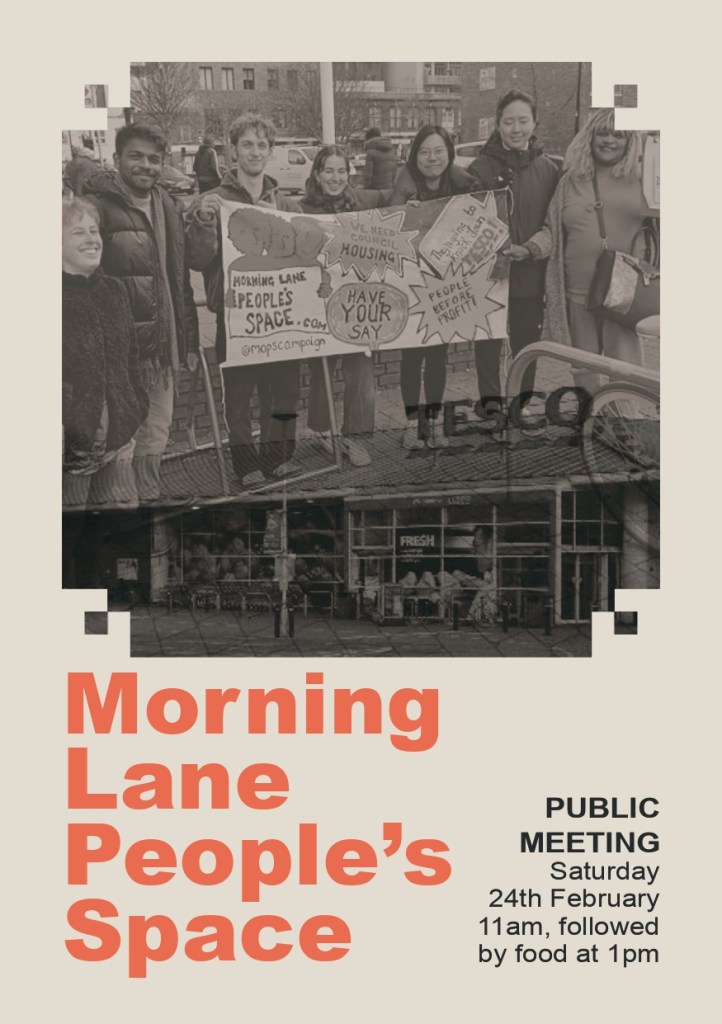
On 24th February we held a public meeting about the Tesco site in Hackney Central, at 55 Morning Lane. Hackney Council have promised to work with the community to create plans for the site. At the meeting Nicola Hudson who is the Council officer in charge said she did not have any experience of co-design and was there to listen. Our key question is:

Are Hackney Council ACTUALLY intending to do real co-design? Or do they intend to do low-level consultation?

The top-level tests of that are:

Is there mutual learning?
Is there making?
Is there (at least some) co-deciding?
Is lived and living experience recognised and valued?

Then, we have these questions about the structure of the planned co-design process:

WHO is running it? And what co-design experience do they have?
WHAT is their process? HOW long is the process? HOW does it fit into the broader development timelines? HOW will the process be managed, iterations evolved, shared and communicated?
WHO is participating from the community? HOW will recruitment and support be managed?
WHEN and WHERE will the workshops be? (They should GO TO the community participants at appropriate times and in appropriate spaces.)
WHAT recompense is being offered for community participant time, effort and expertise?
WHAT resources are being provided and supported by the council (and later by architects and developers) for community participants?
WHAT training is being supported by the council for community participants?

Our Next Public Meeting

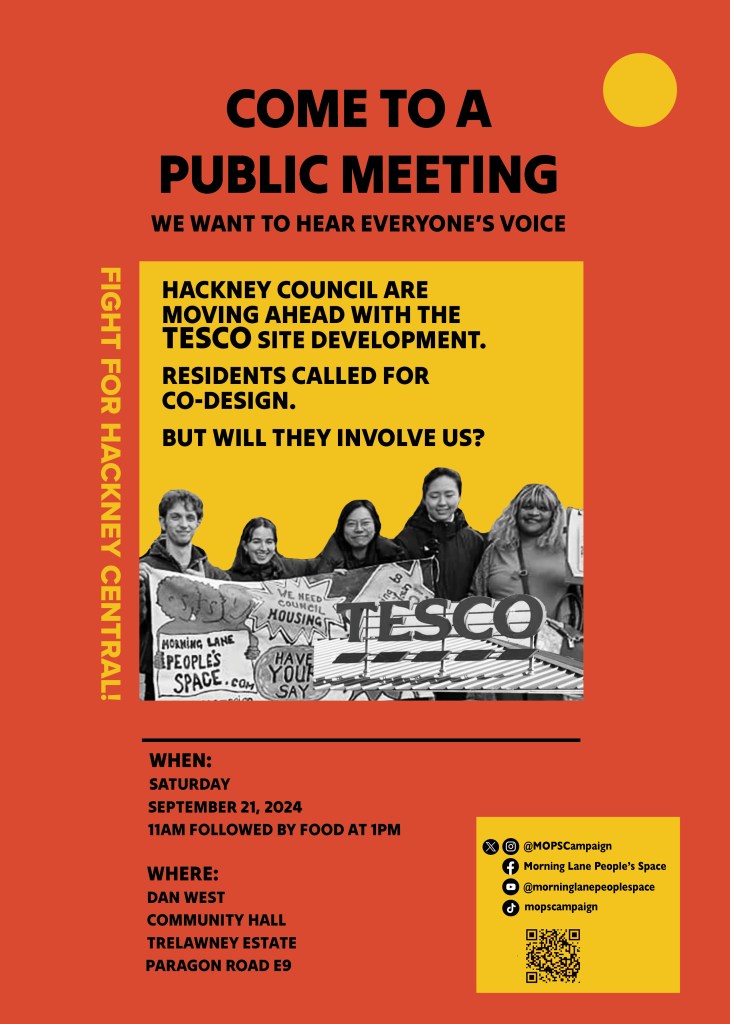
We’re having another public meeting – everyone is welcome! Hackney Council officers will be there. But most of all we want local people to be part of finding out what Co-Design can be and how we can influence the development of the Tesco site.
Date: Saturday 24th February 2024,
Time: 11am – 1pm, followed by lunch,
Place: Dan West Community Hall, Trelawney Estate, Paragon Road E9 6PH

Co-Design for the development of the Tesco Site at 55 Morning Lane. What does it mean?

Hackney Council has committed to a Co-Design process for developing the Tesco site on 55 Morning Lane. What is Co-Design and how will it work? Can we be sure local people’s voices are heard? How can we be involved in decision making?

Morning Lane People’s Space has organised a meeting about the Tesco site, to talk about how we can be involved in decision making and to hear what Co-Design could be from those already involved in similar projects. Come along to learn more and join the discussions.

Our questions for the candidates for Mayor of Hackney

A couple of weeks ago we contacted all the candidates in the upcoming byelection for Mayor of Hackney asking them to respond to three questions about 55 Morning Lane, the Tesco site in Hackney Central. Initially only two candidates replied: Annoesjka Valent for TUSC and Zoë Garbett for the Greens. After the deadline, Labour’s Caroline Woodley also replied. Below we publish their responses in full. We always intended to publish in full any responses to our questions that we received by the deadline. So in publishing those from these three candidates without any others, this is not an endorsement of them, but a result of theirs being the only ones that we have.

Zoë introduced her responses by saying that she has “been proud to support the Morning Lane campaign” and that: “For too long the Council has put the interests of large developers over residents”. Caroline introduced her responses with “apologies for the belated submission”. Annoesjka introduced her responses by saying “I wholeheartedly agree with your aims and objectives of your campaign” and outlining her background in the trade unions UNISON and Napo.

  1. Will you make a commitment to at least 50% social-rent council homes on any development on the Tesco site? 

Annoesjka’s reply:

As stated in my printed election address, I would commit to 100% council homes at Morning Lane and at the Britannia site. To my knowledge, Hackney Council has £345 million in reserves. I know, not just Hackney Council, but also the Government has got money.

Caroline’s reply:

I will formally recognize in development meetings the value of the resident-led engagement work undertaken by Morning Lane People’s Space and the ambition of 50% social-rent. I commit to meeting with residents as we explore the various options and to ensuring the Council prioritises and pursues every possible route to delivering more social-rent housing in Hackney Central and across the borough.

Zoë’s reply:

If elected Green Mayor, I will commit to doing everything in my power to ensure that the site is designed and shaped around the local community – including to achieve at least 50% social-rent council homes. This commitment aligns with Green Party values and my other commitments regarding housing in the borough which can be found in full here: https://zoe4hackney.co.uk/policy/housing/ 

I am committed to putting residents first by:

  • Providing more social housing to meet the needs of local people. Exploring additional investment from pension funds and borrowing to build social housing.
  • Prioritising council land for council housing.
  • Investigating how the Council can support community-led and co-operative housing in new developments, prioritising community-led over profit-led developments.

Community must be the guiding ethos for housing in Hackney. We need to make places which foster a sense of safety, lasting relationships and leisure.

Despite mass construction, the promised number of social homes do not materialise due to viability or lack of sale of private sector houses. I have been calling for a review of this approach (cross-subsidy model), where the Council partners with a developer which builds luxury flats for sale so Council properties can be built. This approach is outdated, gentrifies an area and forces out communities. I commit to exploring every possible alternative.

  1. Do you agree with the findings of our reports that we need to maintain a supermarket of the same size as the current Tesco on 55 Morning Lane?

Caroline’s reply:

I have always supported the call from residents in Hackney Central to retain a supermarket of a size that can serve the local area (i.e. not reduced in size to an ‘express’). I will continue to do so if I am elected Mayor and will make sure the Council works with partners to deliver a supermarket that residents consider suitable for the Morning Lane site.

Zoë’s reply:

As Green Mayor, I would welcome community voice at the very centre of decision-making. Your research has shown, and heard this directly from shoppers when I’ve been standing outside Tesco, how important it is to have access to affordable food and a good range of food. I would do everything in my power to maintain a supermarket the same size as the current Tesco – albeit favouring a People’s supermarket as exists in other parts of London, rather than a large profit-led corporation, and/or exploring alternative shopping such as smaller Hackney-run shops over the same footprint. In the development and consideration of these options, I will make sure that affordability is central and residents are consulted. 

Currently, developers have too much say over what happens in the borough and their profits are considered more important than the views of people living and working in the borough. At the Tesco site and in other locations around the borough, I will give more power to residents, community groups and local businesses (including artists) to shape the future of their neighbourhoods – specifically in designing how the space is used to ensure a sense of identity and purpose in the heart of Hackney Central.

Annoesjka’s reply:

Yes. Otherwise you will just get this little mini Tesco or whatever appearing only instead where prices are likely higher than in the usual big stores and you can’t get everything you need locally. Where would you go elsewhere? People having to travel longer journeys on buses to get to a bigger cheaper supermarket. I’m thinking local elderly, disabled and vulnerable residents can just do this easily now but will be deprived if this goes, including poorer families.  

  1. How will you ensure that Hackney Council shares power with the community in deciding the future of 55 Morning Lane?

Annoesjka’s reply:

No decisions to be made without full local and more importantly, MEANINGFUL consultation. Also, where is the accountability over that failed Hackney Walk project, how much money has been wasted on that and how was the recommissioning done, again it’s a clear case of where I would say, ‘Open up the books!’. Plenty of times I have walked into meetings where I’ve been told, ‘Oh but we consulted you’ when it’s been bits of papers sent to you, you make objections and nothing has been taken into account. That is not meaningful consultation, that is a ‘tick box’ exercise and I would never agree with or condone such.

Zoë’s reply:

One of the big ideas of my mayoral campaign is to bring decision-making of the council back into the service of local communities. The Morning Lane is the perfect example of a campaign that has had to fight – simply to be listened to by the council, and not yet with any guarantees that community voice will be the guiding ethos of any future development on the site.

I commit to valuing and listening to residents and community groups who are passionate about their lives, homes and communities. 

If elected Green Mayor, I will insist and ensure that the community is engaged from the start, and throughout, the process for bringing homes and amenities to 55 Morning Lane. I will require transparency in how we design and progress plans. This commitment sits well with my pledges for the Mayor of Hackney campaign to bring People Power to the heart of the council by, for example:

  • Supporting calls for a referendum, asking residents whether they would like to move from a directly-elected Mayor & cabinet structure, where a few people hold a lot of power, to a committee system where more councillors (representing residents) have a greater say in the decisions the Council makes.
  • Replacing town plans with people’s plans.
  • Requiring resident-led planning to be supported from the start of the process for any changes to estates.
  • Having regular meetings with and listening to unions including workers unions, student unions and independent renters unions.
  • Regularly sharing information and being transparent so residents are informed of key decisions and updates to make participation in scrutiny as easy as possible.
  • Holding regular, powerful and wide reaching Citizens’ Assemblies, supported by a network of community panels.

Read more here: https://zoe4hackney.co.uk/policy/power/ 

Local residents are experts in what is most needed in their neighbourhoods – so where we need to maintain and update local infrastructure, I will put the people of Hackney at the heart of decision making.

Caroline’s reply:

I will continue the ‘Hackney Central Conversation’ between the Council, local organisations, residents and local businesses and keep the Hackney Central Panel which MOPS is part of, ensuring it shapes plans as they come forward. I will always press the Council to show that residents’ views have been taken on board. It’s been good to see the questions raised through the MOPS surveys and the overall response.

I’ve also, through my current portfolio, been engaged in developing various supplementary planning documents and strategies focused on design and planning guidance, green infrastructure, inclusion and accessibility. I am keen to ensure that ‘child friendly’ design guidance is upheld, with principles (as set out below) that support doorstep play, creating spaces where young people want to be, and including the voices of children and young people as part of the design process, and also that we create places with multi-generational opportunities, where older people can age well.

Design Principles

  1. Shaping my Borough: to ensure children and young people have the power to influence change in Hackney.
  2. Doorstep play: to provide easily accessible and overlooked space for play and social interactions immediately outside the front door.
  3. Play on the way: to provide multi-generational opportunities for informal play, things to see and do around the neighbourhood beyond designated parks and playgrounds.
  4. Streets for people: to ensure that children, young people and their families can safely and easily move through Hackney by sustainable modes of transport such as walking, cycling or public transport.
  5. Contact with nature: to design places which increase everyday opportunities to access and connect with nature.
  6. Destinations for all: to design socially inclusive and accessible public spaces that are welcoming, enjoyable and safe for everyone.
  7. Making spaces where young people want to be: to ensure that public spaces are designed, planned and managed to consider the varied needs of teenagers and young people.
  1. Health and well-being: to ensure the design of outdoor environments supports improved physical health and mental well-being.
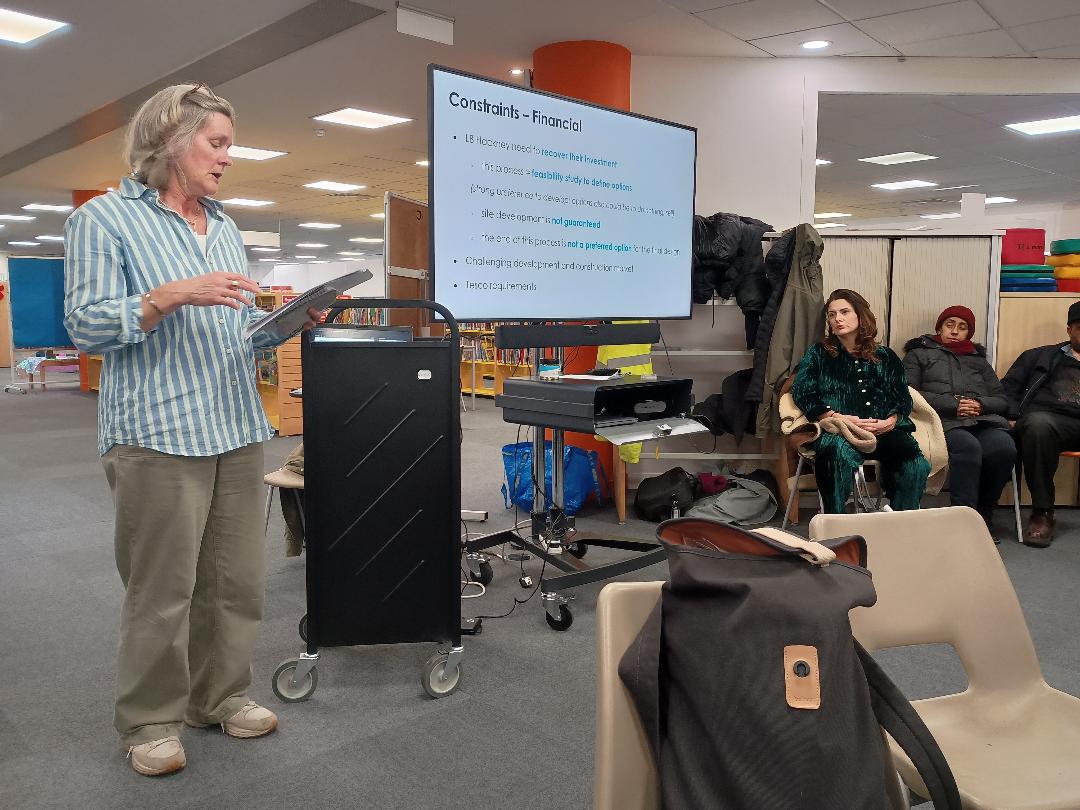
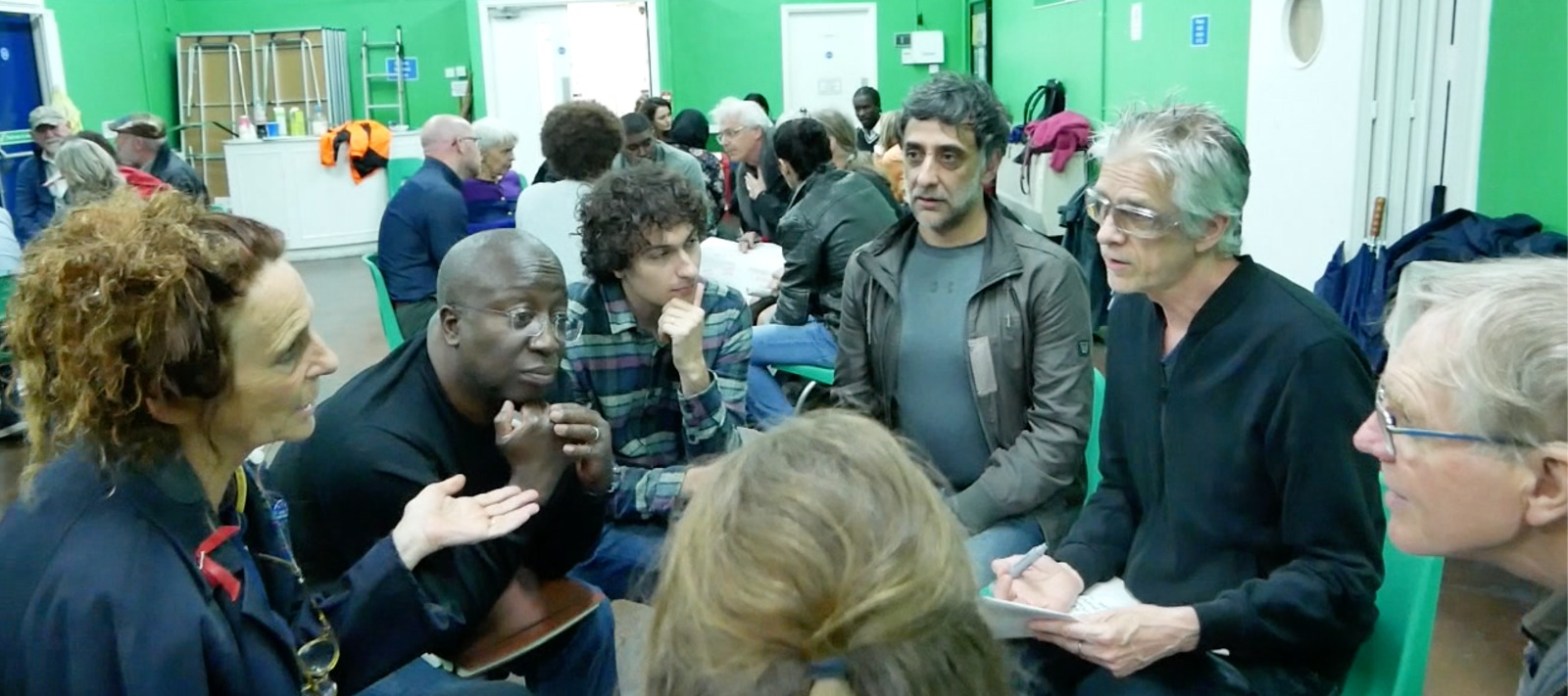
Public meeting demands Hackney Council share power in determining the future of 55 Morning Lane

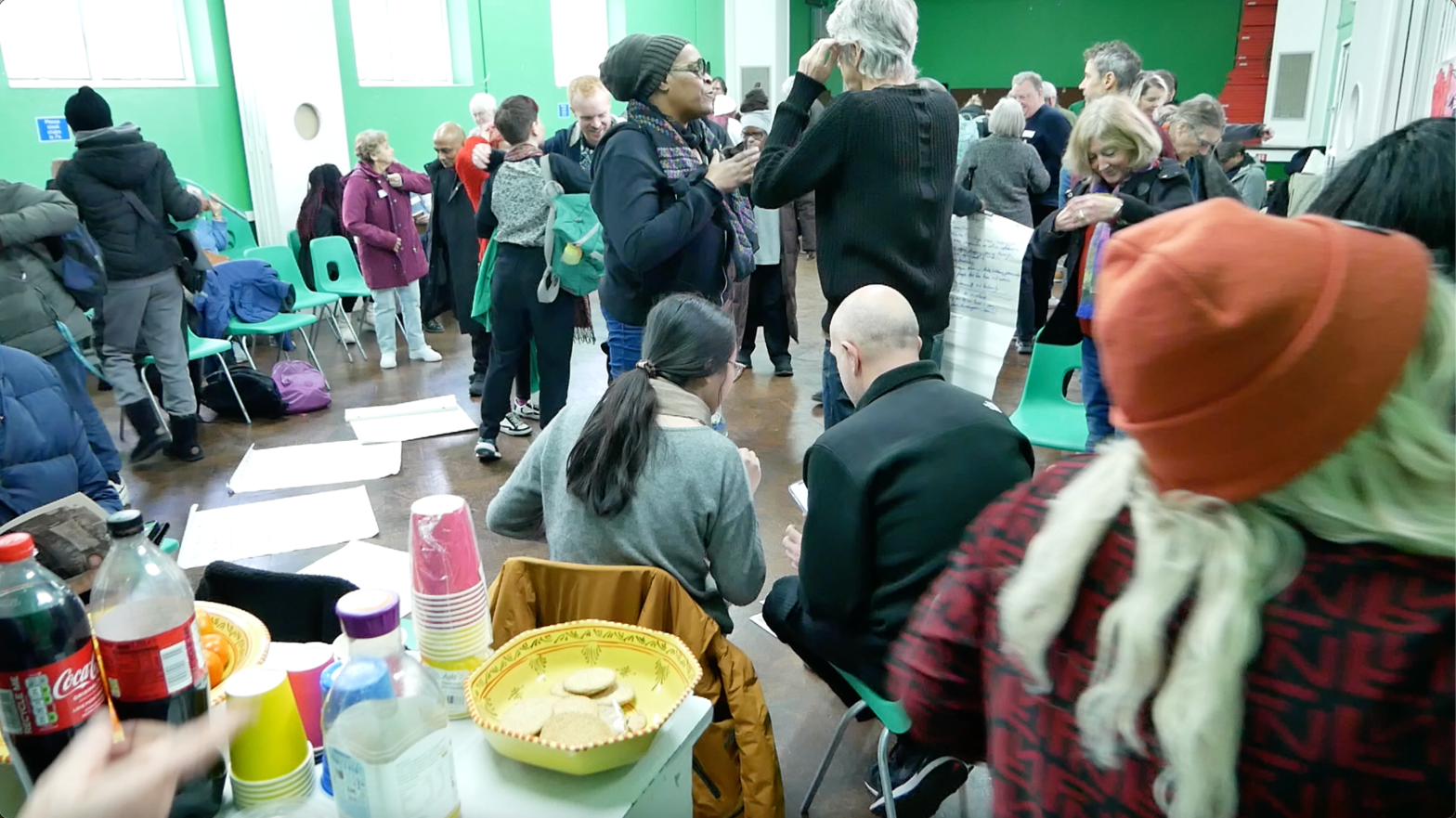
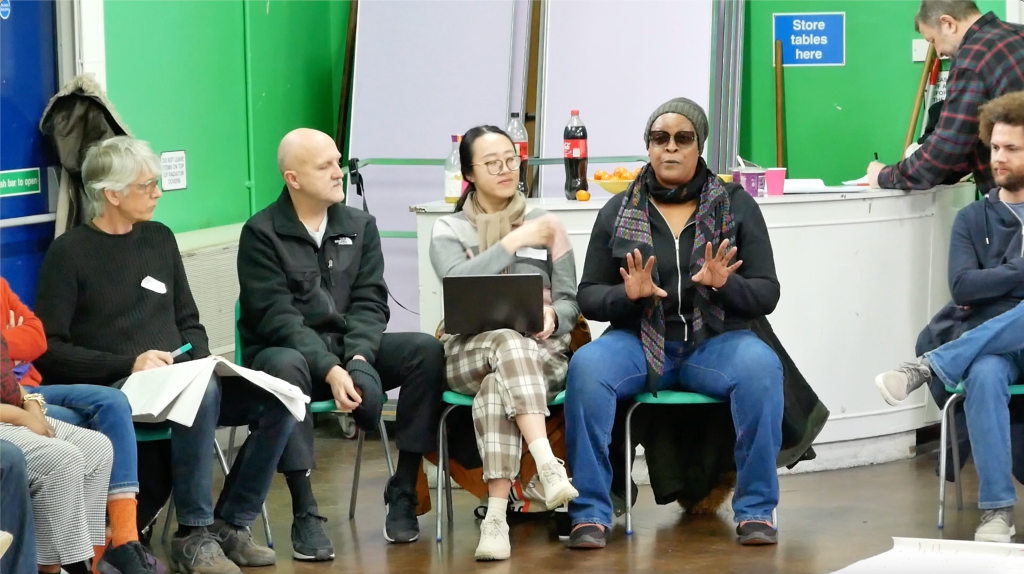
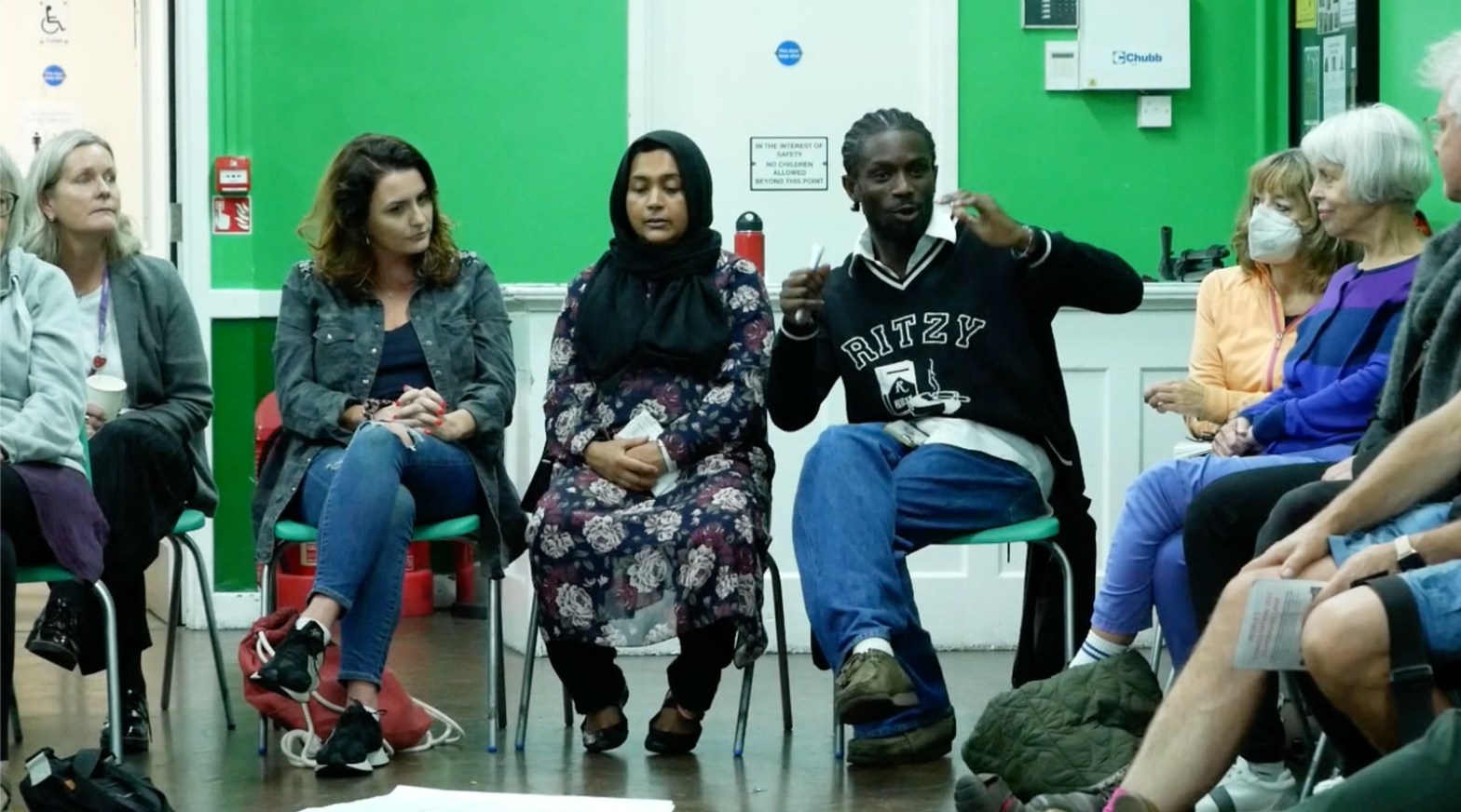
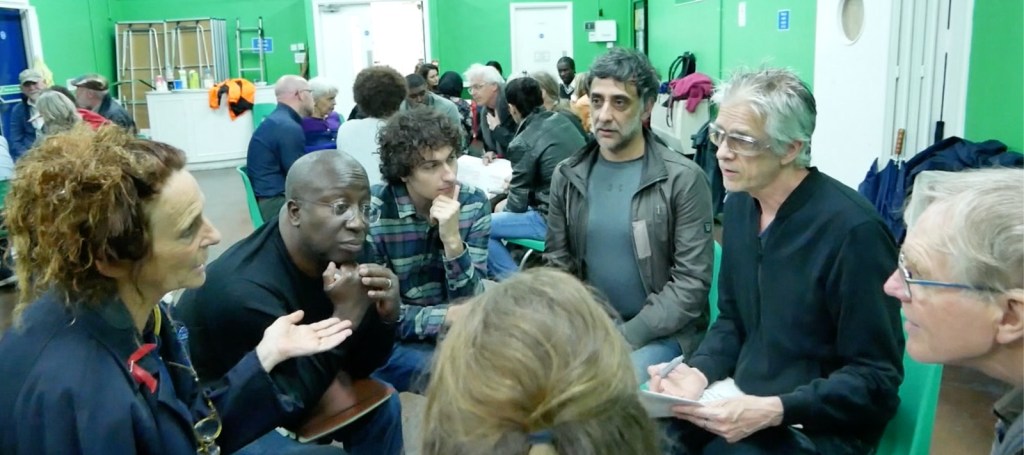
On 20 September 2023, we held a public meeting to discuss the plans for 55 Morning Lane. Three council officers and 4 councillors were among the 50 people who came together to discuss the site, despite the wind and rain that were afflicting Hackney that night.

The meeting heard that our community consultation had shown three clear priorities for housing and shopping: cheapness, localness and spaciousness. The meeting recognised these and the focus on council housing that can provide homes for people on the housing waiting list and for shops and public spaces were everyone can feel like they belong.

Another clear message was that we do not want the usual fake consultation or ‘co-design’ that is just a way to get residents to sign off on another development that gentrifies Hackney. We need consultation that shares power with us including for decision making over the future of 55 Morning Lane.

There will be more about the findings from our consultation and the discussions in the meeting in our next report later this month.

Hackney Council appoints project manager for 55 Morning Lane

Hackney Council has now appointed Nicola Hudson to project manage 55 Morning Lane. Before this, Nicola worked on Woodberry Down Estate in the North of the borough. In 1999, Hackney Council decided that this award-winning council estate must be demolished. Woodberry Down is a ‘regeneration’ project rather than a new build. But it involves three things that must be avoided at 55 Morning Lane:

  • Inauthentic consultation: Paul Watt’s research about Woodberry Down evidences how often “residents did not feel that they were being asked to engage in a genuinely dialogical and participative process because the key decisions had already been made: ‘We had all of these consultations, but the deal’s done. There will be rows and rows of Woodberry Down flats, every inch of it will be covered because they [council] see money so it’s going to happen. Consultation is just part of the propaganda’”.
  • Dishonest consultation: The London Tenants Federation documented in 2017 that at Woodberry Down, “there was no ballot of residents. …. Meetings were held on different parts of the estate, conducted by a PR firm. There was no talk of private homes being developed. Everyone thought they would have new council homes on the estate. Everyone was told they would only have to move once”. In reality, none of the new flats are council homes; they are managed by Genesis Housing Association; and some people have had to move three or four times. A lot of other promises did not materialise such as resident representation on the management board.
  • State-led gentrification: As the timeline has extended to 2032, the number of projected housing units on Woodberry Down has increased from 4,500 to 5,557, with only 1,088 for social rent. Despite delays in building most of the promised social-rent homes, developer Berkeley Homes has built its 23-floor shiny tower blocks of private flats – with a residents-only swimming pool and gym. Overall the regeneration reduces the proportion of public housing on Woodberry Down from 67% to 20%. As Paul Watt says, this is “extensive state-led gentrification masquerading as estate regeneration”.